

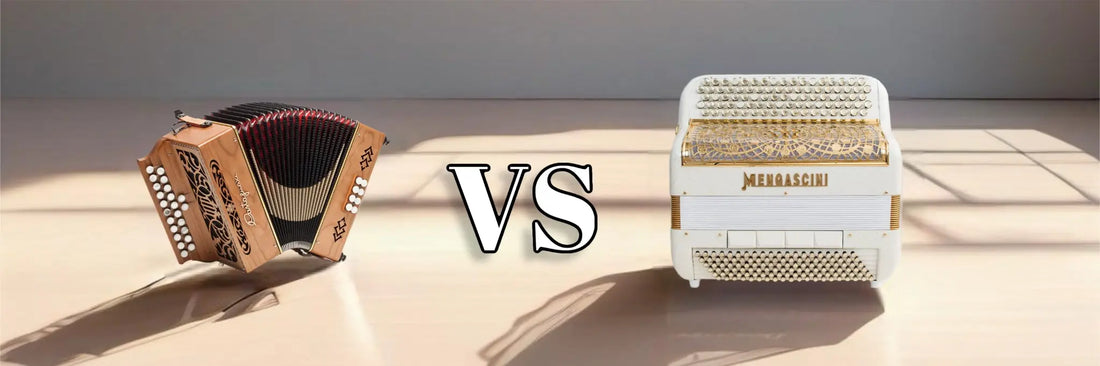
Difference between diatonic and chromatic accordion?
The accordion is a fascinating instrument that comes primarily in two types: the diatonic and the chromatic. Each has its unique characteristics, catering to different needs and musical styles. Here's everything you need to know to better understand these two versions of this timeless instrument.
What is a diatonic accordion?
The diatonic accordion is often associated with traditional and folk music. Its peculiarity lies in its operation: the notes produced change depending on the direction of the bellows (pulling or pushing).
This gives it a unique sound, both expressive and rhythmic, ideal for styles such as folk, musette, or Celtic music. However, its limited range can be a hindrance for compositions requiring a wider range of notes. It is also an instrument appreciated for its lightness, practical for travel.
What is a chromatic accordion?
The chromatic accordion, on the other hand, is designed to offer maximum versatility. It allows playing all chromatic scales, regardless of the bellows' direction. This consistency makes the chromatic accordion perfect for various styles such as classical, jazz, or French variety.
Thanks to its extended keyboard and more complex technique, it appeals to professional musicians seeking greater musical freedom. Its structure is also suited for high-level stage performances.
How to choose between a diatonic and chromatic accordion?
The choice primarily depends on your needs and musical style. If you are a beginner or drawn to traditional music, the diatonic accordion can be an excellent choice. However, if you are looking for a versatile instrument suitable for more complex repertoires, the chromatic accordion is ideal.
In conclusion, whether diatonic or chromatic, each accordion has its own charm. Take the time to test both to find the one that will make your music vibrate!